Department of Information Systems
The Department of Information Systems is one of the key departments at Satbayev University, focused on training a new generation of highly qualified specialists in the field of intelligent information systems and researchers in the field of design, development, and management of AI information systems capable of ensuring the digital transformation of the economy of the Republic of Kazakhstan and the international community. The strategic focus of the department is the development of intelligent information systems.
In 1962, the Kazakh Polytechnic Institute established the Faculty of Automation and Computer Engineering, which included departments of automation and telemechanics, computer engineering, radio electronics, and electronic engineering. The Department of Computer Engineering trained engineers in the field of SME, which later transformed first into Electronic Computers and then into Computers, Complexes, Systems, and Networks.
Over the years, the department was headed by leading specialists: first by Associate Professor L.A. Brichkin, then by Associate Professor L.A. Vinokurov. In 1971, the department was temporarily incorporated into the technical cybernetics department, but was restored in 1975. During the leadership of S.T. Tynymbaeva, the fields of computer engineering and information technology were actively developed, research was conducted for science and industry, and cooperation with large organizations was established. The department became one of the largest centers for training specialists in the USSR.
Later, the faculty and department expanded their educational areas to include information security and software, and began teaching foreign students. Over the years, the department was headed by A.S. Ermakov and G.D. Zhangisina, during which time new educational standards were developed and modern specialties were introduced.
At the same time, the Department of Technical Cybernetics, created in 1971 under the leadership of A.A. Ashimov, developed in parallel, training specialists in the field of automated control systems and computers. Over time, it was transformed into the Department of Information Technology, where bachelor's, master's, and doctoral programs were introduced.
The mission of the Information Systems Department at Satbayev University is to train a new generation of highly qualified specialists in the field of intelligent information systems and researchers in the field of design, development, and management of AI information systems capable of ensuring the digital transformation of the economy of the Republic of Kazakhstan and the international community.
The goal of the department is to create a modern educational and scientific environment that provides training for highly qualified specialists in the field of intelligent information systems, artificial intelligence, data engineering, and cloud technologies, capable of developing and implementing innovative AI digital solutions, conducting scientific research, and working effectively in the context of global digital transformation and sustainable development.
The department's priorities include implementing educational programs at all levels (bachelor's, master's, doctoral), conducting research in the field of artificial intelligence, Big Data, digital platforms, and intellectual analytics, developing partnerships with IT companies and industrial enterprises, expanding academic mobility and English-language programs, forming practical competencies in students with a focus on international certification, as well as supporting start-up initiatives and commercializing scientific developments.
The student body and faculty of the Information Systems Department are characterized by a high level of academic activity, scientific productivity, and sustainable development dynamics. As of January 1, 2026, the total number of students is 894, of which 851 are enrolled in the bachelor's degree program 6B06106 "Information Systems," 35 master's students are enrolled in programs 7M06103, 7M06108, and 7M06109 "Management of Information Systems," and 8 doctoral students are enrolled in program 8D06103 "Management Information Systems." The ratio of training levels is 95% bachelor's, 4% master's, and 1% PhD, which reflects the mass nature of basic training while maintaining a research vertical. The share of foreign students is 2.35% (21 people), which indicates the gradual internationalization of educational programs.
The programs are accredited until 2026–2031. The bachelor's degree program offers modern training tracks: DevOps, Business Analytics and IT Project Management, Information Systems Architecture, and Business Application Development.
The academic disciplines cover DevOps engineering, system design, virtualization and containerization, business process analysis and modeling, CI/CD, IT audit, information systems integration, prototype development, and specialized business solutions.
The department actively develops international cooperation and dual degree programs. A joint program in Computer Science is being implemented, and a 3+1 dual degree program with Inha University in Management of Information Systems is planned.
The material and technical base consists of specialized laboratories from Cisco, Huawei, 1C, as well as the MyBPM laboratory for business process automation, etc.
This ensures practice-oriented training and close integration with industry.
The Department of Information Systems is a dynamically developing educational and scientific unit of the university, combining modern educational programs, active research activities, international integration, and a practice-oriented approach to training personnel for the digital economy.
The department's educational activities are implemented through programs 6B06106 "Information Systems" (bachelor's degree), 7M06103, 7M06108, 7M06109 "Management of Information Systems" (master's degree of various durations) and 8D06103 "Management Information Systems" (PhD doctoral program).
The Department of Information Systems was formed by splitting the Department of Cybersecurity, Information Processing and Storage on January 5, 2026.
The department's teaching staff consists of 25 full-time employees, with 36% being senior staff. The teaching staff includes professors, doctors of technical sciences (12%), associate professors, candidates of technical sciences and PhDs (27%), masters and senior lecturers (39%), lecturers (20%) and assistants (2%). Almost half of the full-time faculty (48%) have a Hirsch index in the Scopus database, which confirms their active publishing activity and integration into the international scientific community.
The department has modern laboratories created with the support of companies such as Huawei, Cisco, and 1C. Over the years, more than 30 scientific and applied projects have been implemented. In 2025–2026, a number of studies in the field of machine learning and artificial intelligence are being carried out with a total funding of over 1.2 billion tenge.
Educational programs are implemented in collaboration with foreign universities, including Penn State (USA), City University of Hong Kong, and Hof University (Germany), which gives students the opportunity to study international programs.
Bachelor's students majoring in Information Systems can choose between dual or online learning while retaining their grants, including through the use of the Adway platform.
The Information Systems Department is building a sustainable and systematic model of interaction with employers, focused on practice-oriented training of students, joint projects, and assistance in finding employment for graduates. The department's partner network includes leading IT companies, banks, and technology organizations, including Huawei, CenterCredit Bank, 1C, Halyk Bank, Centurion IT, MyBPM, Kaspi.kz, Bereke Bank, Mont Tech Group of Companies, Noventiq, Lenovo, and Cisco.
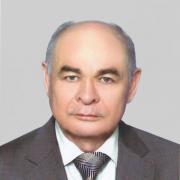
The department is headed by the head of the department, associate professor, candidate of technical sciences Vasily Valeryevich Serbin (office GUK 325).
Educational programs
-
Undergraduate
-
Graduate
-
PhD
-
Distance education